
95% Faster, 100% Reliable: The Engineering Transformation Behind a Data Center Skid Manufacturer
- Leo Salce, Principal

- 3 days ago
- 3 min read

In engineering, time is rarely lost in big decisions. It’s lost in repetition.
For one data center skid manufacturer, that reality had become a serious operational constraint. Every new project required hours of manual modeling, repetitive component placement, and constant rework. What should have been scalable engineering workflows had turned into a bottleneck—slowing down delivery, increasing error risk, and limiting growth.
This is the story of how that changed.
The Hidden Cost of Manual Engineering
At first glance, the challenges seemed familiar. Engineers were spending over 20 minutes placing a single component, repeating the same tasks across hundreds of parts. Multiply that across entire assemblies, and the inefficiency became exponential.
But the real problem ran deeper.
Legacy content libraries—used for critical components like fasteners and conduit systems—were introducing errors into the process. Incorrect bill of materials (BOM) descriptions and faulty component behavior were quietly affecting procurement accuracy and engineering confidence.
This wasn’t just about time. It was about risk.
And when dealing with large-scale data center infrastructure, risk compounds fast.
Rethinking the System, Not Just the Tools
Instead of patching issues one by one, Avant Leap approached the problem from a systems perspective.
The first step was transforming how components were created and managed. By implementing custom content libraries and automation rules, repetitive tasks were no longer manual. Components could be intelligently configured and placed, eliminating inconsistencies and dramatically improving speed.
What previously took more than 20 minutes could now be done in under a minute—a reduction of approximately 95% in placement time, as shown in the KPI improvements (page 6).
At the same time, deep root-cause analysis eliminated inherited errors entirely. Fastener issues disappeared. BOM mismatches were corrected. What was once unreliable became standardized and predictable.
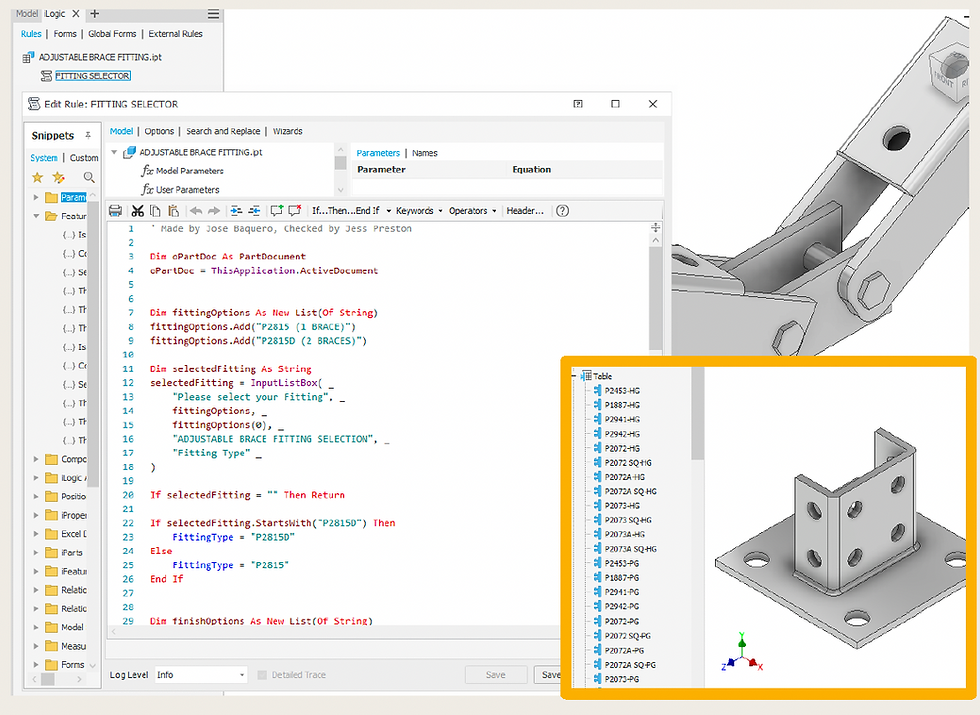
From Rigid Models to Scalable Architecture
But the most impactful shift came from rethinking the modeling approach itself.
Previously, every component was treated as an individual element—requiring manual updates, increasing the likelihood of errors, and making scalability nearly impossible.
The solution? A move toward parametric modeling.
By introducing a structured, frame-based modeling system, the entire architecture became dynamic. Instead of editing parts one by one, engineers could now make a single parametric change that automatically updated entire assemblies.
In practical terms, this meant that up to 480 components could be updated simultaneously with a single design modification (page 10).
That’s not optimization. That’s transformation.

The Business Impact
The results were not just technical—they were strategic.
Speed: Component placement became 95% faster
Accuracy: Critical library errors were eliminated entirely
Scalability: Hundreds of components could be updated instantly
Risk Reduction: Manual intervention points—and therefore errors—dropped significantly
Efficiency: Engineering teams shifted from repetitive execution to higher-value work
As summarized in the final results (page 11), the company moved from reactive, manual workflows to a scalable, governed engineering infrastructure.
What This Means for Engineering Teams
This case reflects a broader truth across the AECO and manufacturing industries:
The biggest inefficiencies are not always visible.
They live inside processes that were never designed to scale.
Automation and parametric modeling are not just technical upgrades. They are strategic enablers—allowing teams to move faster, reduce risk, and build systems that grow with them.
This article highlights the transformation—but the full case study goes deeper into the workflows, methodologies, and measurable impact behind it.
Download the complete case study here:
When engineering teams stop working part-by-part and start thinking system-by-system, everything changes. Speed improves. Errors disappear. And scalability becomes not just possible—but inevitable.


Comments